
Camp Hill, PA · Slab leak detection
24/7 Emergency Line Open
Emergency Slab Leak Repair in Camp Hill: Locate the Pipe Before You Cut
Before anyone talks about a slab leak, confirm that your house has a slab. Many Camp Hill homes sit over a basement or a crawlspace, and a hot spot on the floor or a spinning meter in those houses points somewhere else entirely.
When you call, dispatch asks what the floor is built on, what you are seeing and whether the water is still running. Those three answers decide whether a plumber serving your area looks at a slab, a basement ceiling or a buried line.
- Licensed and insured plumbers
- Same-day service when available
- 24/7 emergency dispatch
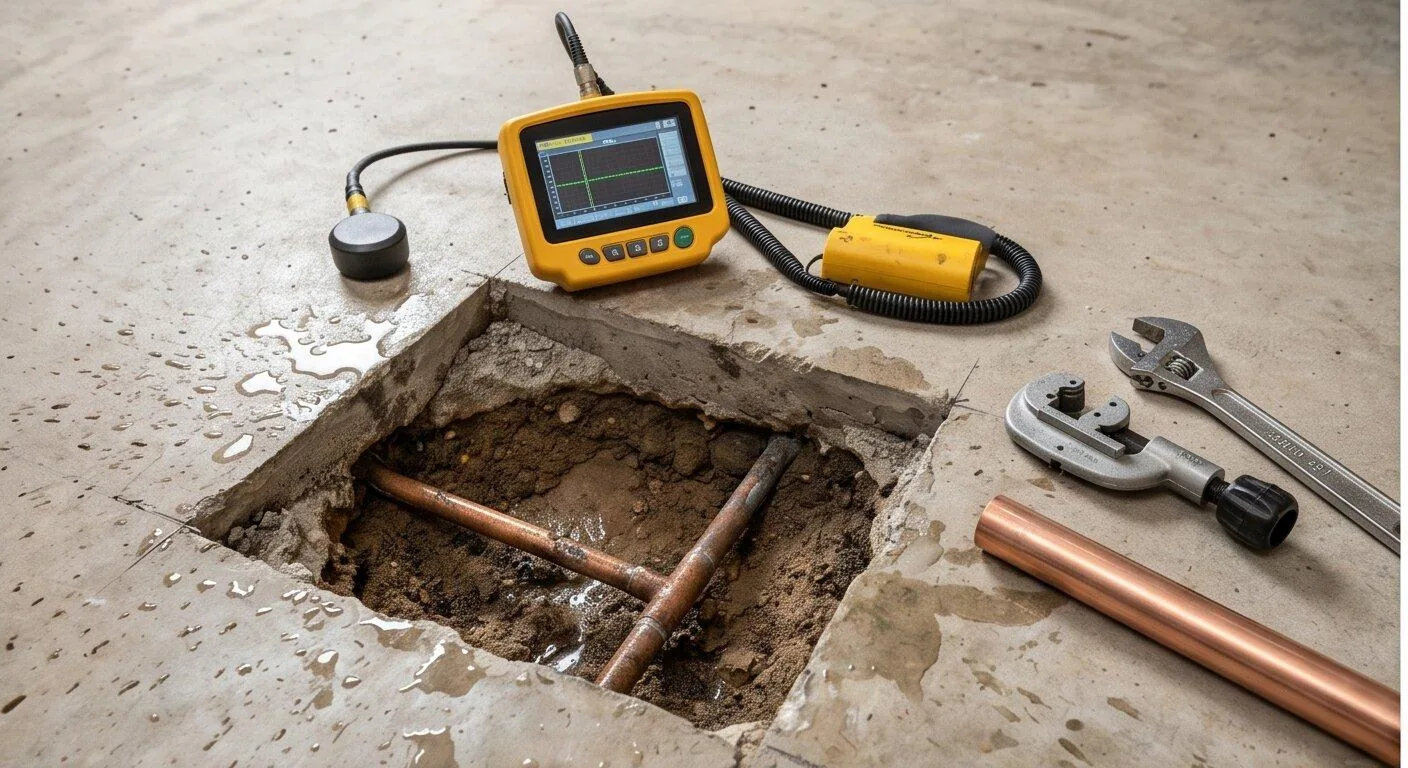
Confirm what your house is built on first
A slab leak is a leak in a water line that runs in or under a concrete floor slab. It is not a problem for every house. A home with a full basement has its supply lines in the joists overhead, where they can be seen and reached, and a crawlspace home has them in the open air below the floor.
The research behind this page found no source that says how common slab foundations are in Camp Hill, so nothing here assumes yours is one. Start with what you can check yourself.
- Look at the lowest level of the house. A full basement or a crawlspace means supply pipes are probably not under concrete.
- Look for a concrete floor with no space below it, often in an addition, a garage conversion or a first-floor room built on grade.
- Check the house plans or ask the previous owner, if you can reach them.
- If you are unsure, ask the plumber to confirm on the first visit before any leak search begins.
In a basement house, the pipes are in the joists, and basement and foundation plumbing leaks are handled the same way as other visible pipework. If the answer is no slab, the leak page that fits is leak detection and repair. If the answer is yes, read on.
Slab leak symptoms and how to know if you have a slab leak
Spotting a slab leak early is mostly a matter of noticing the signs of a slab leak at floor level. People notice them in a specific order, and the order helps separate this from a fixture problem.
| What you notice | What it can mean | First step |
|---|---|---|
| A warm or hot patch on a floor | A hot water line leaking beneath the slab | Stay off the patch if it is very hot, and call |
| Running water heard with every fixture off | Water escaping from a pressurized line | Listen near the water heater, then close the main shutoff and call |
| Water meter turns with everything off | A leak between the meter and the fixtures | Run the meter check, then call |
| Damp carpet, lifted flooring or a musty smell with no source | Water coming up through the slab | Photograph it, move belongings and call |
| Low hot water pressure with no change in the heater | A hot line leaking before it reaches the tap | Note which fixtures are affected and call |
Cracks in a slab and doors that stick can have many causes, and they are not proof of a leak. A plumber confirms a leak with a pressure test and a listening check, not with a guess.
Slab leak detection: pinpointing the pipe before the saw comes out
Slab leak detection is the step that decides how big the repair will be. The aim is to find the leak within a short stretch of pipe so that any cut in the concrete is small.
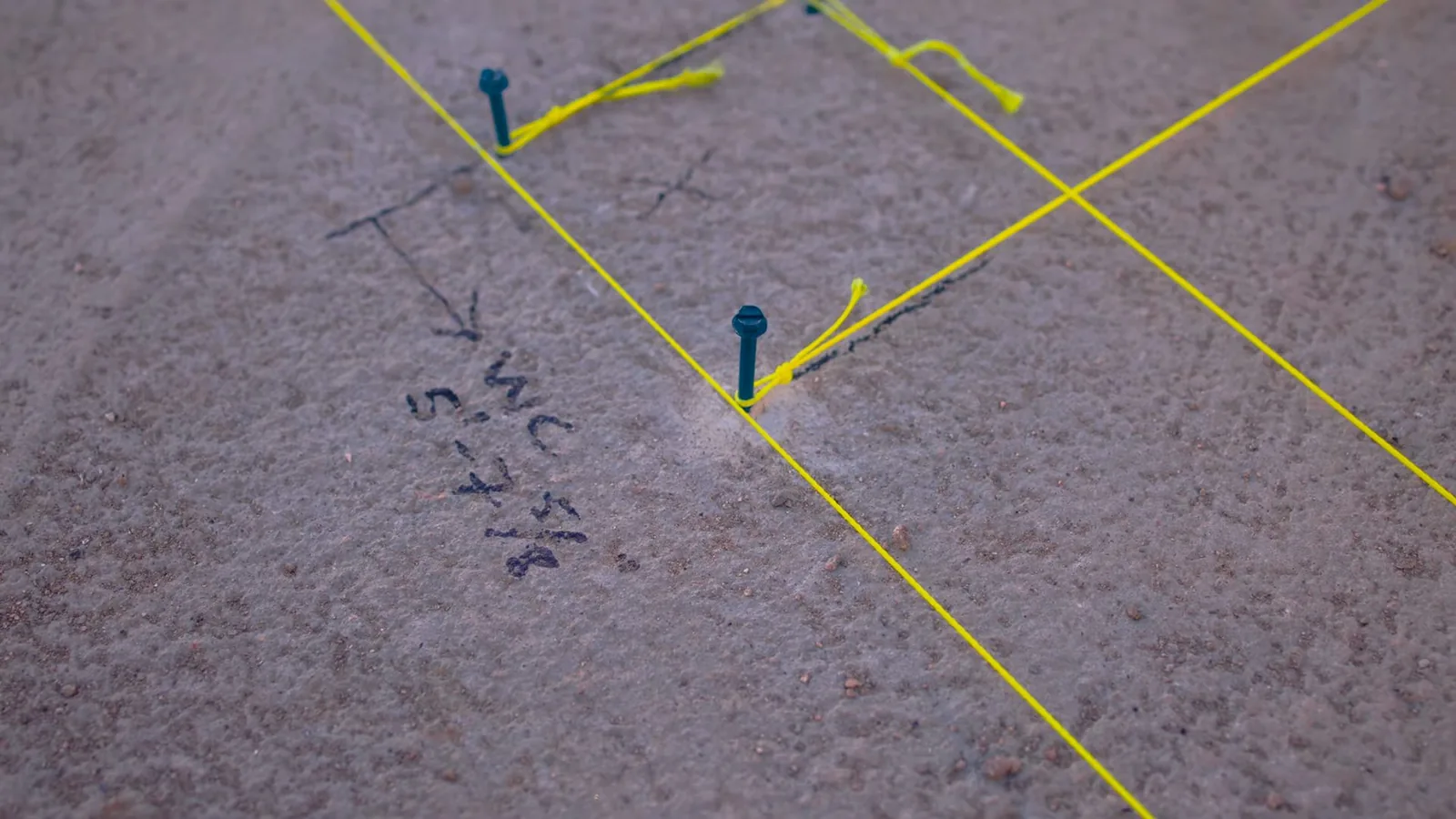
A plumber usually isolates the lines one at a time. Each one is pressure tested, and the line that loses pressure is the one with the leak. Then acoustic listening gear is run across the floor to find where the sound is loudest, and the location is marked.
Request a look at the marked location and an explanation of which line it belongs to. That record also helps if you later talk to your insurer. Foundation leak inspection is part of the same visit when a slab shows cracks or settling.
Warm floor or running water you cannot trace?
Call and say what the floor is built on. Dispatch will tell you what to do while you wait.
Concrete slab plumbing repair: three ways to fix a leaking line
Trenchless slab leak repair is the label some companies use for lining and rerouting that avoid breaking the floor. Slab leak detection and rerouting often go together, since a reroute follows from locating a failed line. Once the leak is located, there are three common ways to deal with it. The right one depends on the pipe, the number of leaks, and how the house is laid out.
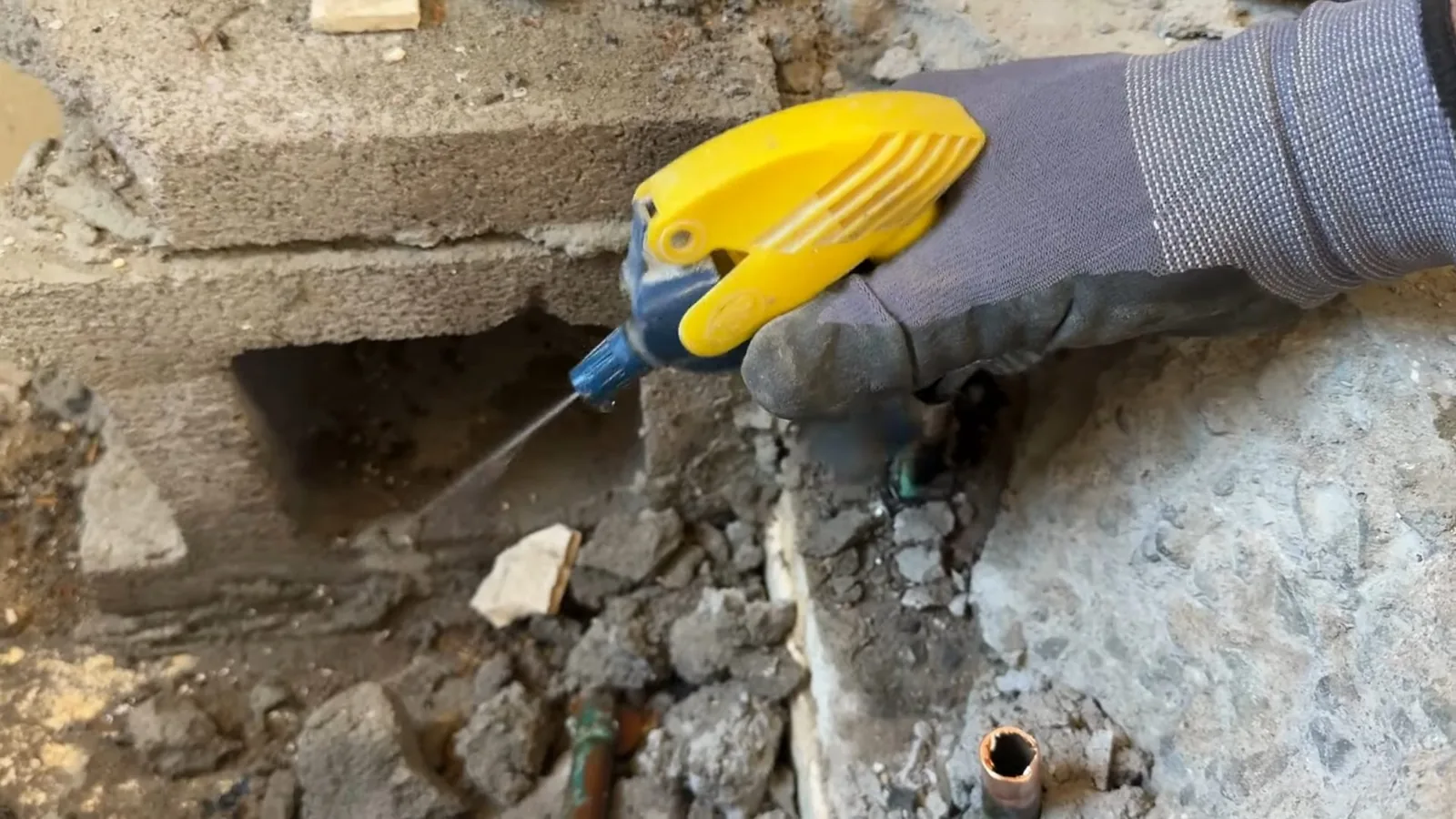
Open the slab and repair the pipe
Breaking the concrete over the leak lets a plumber cut out the bad section and replace it. It is direct, and it suits a single leak in an easy spot. The floor above has to be finished again afterward.
Reroute the line
Rerouting abandons the leaking line under the slab and runs new pipe through walls or the attic. It makes sense when the line has leaked more than once or when the whole slab pipe is old.
Epoxy lining
Lining coats the inside of a pipe to seal pinholes without opening the floor. It is a good fit for some pipe sizes and conditions and a poor fit for others, so ask what the plumber found when the line was inspected.
Water heater and shutoff valve leaks sometimes get mistaken for slab leaks. A plumber checks those first, since a quick part swap costs far less than a floor repair.
What a leak under the floor can do to the foundation and the room above
Slab leaks affecting foundations, slab leaks causing foundation issues and foundation leaks affecting stability all describe the same chain: escaping water softens or washes out soil under concrete. Water that escapes under a slab can wash soil from beneath it, soften the ground the slab rests on and push moisture up into flooring. Slab leaks affecting home foundations, and any underslab leak service call, deal with the same risk. A small leak over a long time can matter more than a short, large one.
Fast action limits the damage. Close the main shutoff when you confirm a leak and keep traffic off wet flooring. Wet carpet, padding and drywall bottom plates can grow mold if they stay damp, so removal and drying matter as much as the plumbing fix. That work is covered under water damage cleanup.
Think water is coming up through the floor?
Close the main shutoff and call. Dispatch will say what to do next and whether same-day service is available at your address.
Insurance and a slab leak: documents worth gathering
Policies differ, and this page cannot tell you what yours covers. It can tell you what helps any claim. Many policies treat sudden water damage differently from a slow leak that went on for months, so records matter.
- Photos of the leak area and any damage before cleanup.
- The date you first noticed signs and the date you called.
- The plumber's written note about where the leak was found and which line failed.
- Meter or water bill readings that show when usage changed.
Slab leak insurance claims assistance, if a contractor offers it, should be in writing, and the same applies to any promise about what a policy will pay. Call your insurance company early and ask what they need. Ask for any denial to be explained in writing.
Same-day help for a slab leak, and nearby pipes that can be involved
Need slab leak repair now? Residential slab leak repair and residential slab leak services start the same way: find out what the floor is built on and where the water goes. If water is coming up through the floor now, close the main shutoff and call. Dispatch confirms same-day availability when you call, and arrival depends on the hour and the address. Emergency and 24/7 service for all plumbing questions sits on the emergency plumber homepage.
A line under the slab is only one place where old pipe fails. When several runs have leaked, or when pipe has failed in more than one spot, ask about full repiping, which replaces the whole run rather than patching it.
Slab leak questions answered for Camp Hill homeowners
What are the symptoms of a slab leak?
Picture a homeowner who steps onto the kitchen floor and finds a warm spot near the pantry. The heater has not been touched, and the hot water seems to take longer than it used to reach the sink. That pair of clues, a warm patch and slower hot water, is a classic early sign.
Other signs are water audibly running while every fixture is closed, a meter that keeps moving, and damp flooring. None of them proves a slab leak on its own, and the first step is still to confirm what your floor is built on.
What does a slab leak repair cost?
No figure is given here because the price depends on facts that are not known until the leak is located. The main drivers are how deep and how long the leak is to reach, which method fits, how much floor finish has to be redone and whether other lines are affected.
Ask for the scope and the total in writing after the leak has been located, and ask what is included for floor repair.
How do I know if I have a slab leak or a different leak?
Begin with the visible clue. If the damp spot or warm patch is on a floor with nothing below it, the supply line may be under the concrete. If you have a basement or crawlspace, the leak is probably in the open pipes above.
Run the meter check with all water off. A turning dial points to a leak somewhere. A plumber then confirms where with pressure testing and listening gear, and tells you which page of repairs applies.
Does insurance help with a slab leak?
Sometimes, and it depends on your policy. Here are the two common situations and when each one applies:
- Sudden, accidental water damage: some policies pay for the damage the water caused, and may treat repair of the pipe itself differently.
- A leak that went on for a long time: some policies exclude it, and records showing when you noticed the problem become important.
Read your policy or call your insurer before authorizing demolition, and keep the plumber's written findings.
Call about a slab leak
Say what your floor is built on and what you are seeing. The same number reaches dispatch for slab leak detection and repair any hour of the day.
- Licensed and insured plumbers
- Same-day service when available
- 24/7 emergency dispatch