
Camp Hill, PA · Water heater installation
24/7 Emergency Line Open
Water Heater Installation for Camp Hill Homes: Choosing a Unit That Fits
Many Camp Hill houses were built before 1950, and utility gas is the most common heating fuel here. A water heater in an older house often sits in a basement corner that has been rearranged more than once.
Call and describe the tank, the fuel and the symptoms. A plumber serving your area can tell you whether the unit is worth another repair or due for replacement, and what the swap involves.
- Licensed and insured plumbers
- Same-day service when available
- 24/7 emergency dispatch
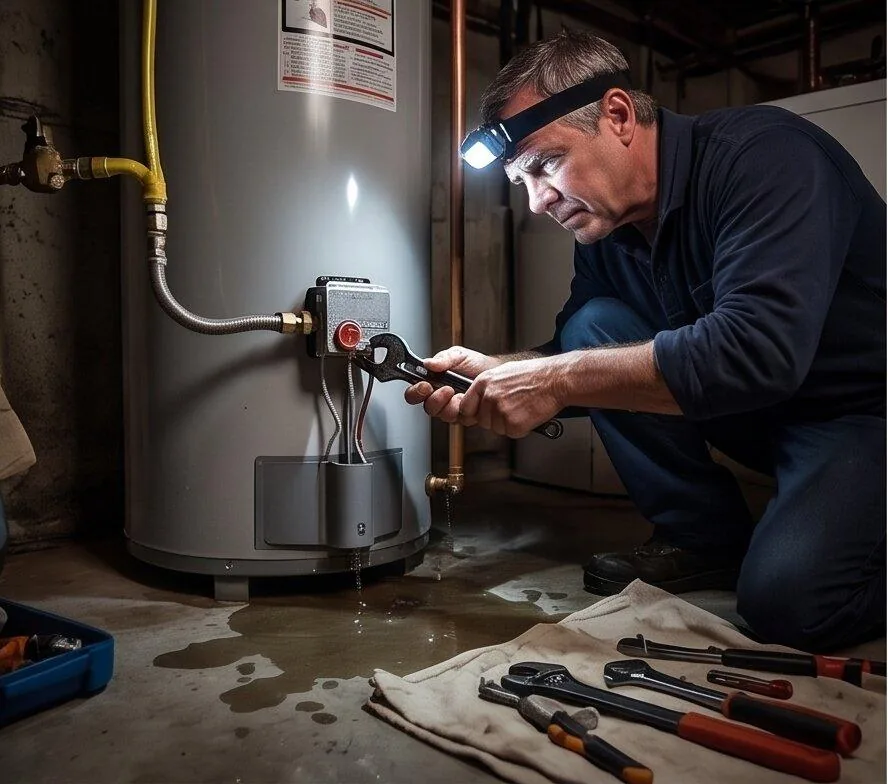
Installation: what a new water heater swap involves
A standard replacement starts by shutting off the water and the fuel, draining the old tank and disconnecting the supply lines. The old unit is carried out, the new one is set on the same footprint and the connections are remade. Then the plumber fills the tank, checks every joint, restores fuel and power and lights or tests the burner or elements.
Most of the work is in the details around the tank. Supply connectors, shut-off valves, the temperature and pressure relief valve and its discharge pipe all get checked, and worn parts are replaced rather than reused. Venting matters on a gas unit, because a flue that has settled or corroded can leak exhaust into the house.
A swap is usually a single visit when the new tank matches the old one and the connections are sound. Moving the unit, changing fuel or fixing old piping adds time. Dispatch can tell you which kind of job to expect once you describe the setup.
- Say whether the heater is gas or electric and roughly how old it is.
- Describe any leak, rust at the base or water on the floor.
- Mention a basement location, a closet or a tight utility room.
- Tell dispatch if the house has no hot water at all right now.
Expansion tank, permit and code questions before the swap
Some installations add an expansion tank. When a house has a check valve or a pressure reducing valve on the incoming line, heated water has nowhere to go, and pressure builds inside the plumbing. An expansion tank absorbs that swing. A plumber can look at the incoming line and say whether yours needs one, and a dripping relief valve is often the clue.
Municipal rules differ, and no source confirms what Camp Hill requires for a like-for-like swap. The borough lists a codes enforcement and zoning office at 2145 Walnut Street, with phone lines at 717-737-3456 and 717-737-3457. Call before the work and ask whether a permit applies to your address.
Water heater expansion tank installation is a short add-on during a swap. Expansion tanks repair is a separate visit, because an old expansion tank that has lost its air charge cannot be topped up for long.
Homes in Lemoyne, Lower Allen and New Cumberland answer to their own offices, so the right call depends on which municipality holds the address. Ask the plumber to confirm that question when scheduling.
Water heater failed or leaking?
Shut off the water to the tank, then call. Dispatch will tell you what to do until a plumber arrives.
Replacement: knowing when repair stops making sense
Age, leaks and repeat failures decide this. A tank that leaks from the shell cannot be repaired, because the steel liner has failed. Water at the base can also come from a fitting or the relief valve, so a plumber should look before the verdict. A heater that needs a second repair soon after the first is often near the end of its life.
Compare the choice honestly. Repair is sensible when the tank is sound and one part failed, which is the territory of repairing the old unit. Replacement is the better call when the tank is leaking, rusted or old enough that the next failure is likely.
Gas water heater replacement and electric water heater replacement follow the same steps, with different fuel connections. If the gas piping near the heater looks worn, or you plan to add an appliance, the gas line work page covers what that involves. Hot water tank replacement is also the moment to fix a rusted drain pan or a sagging stand.
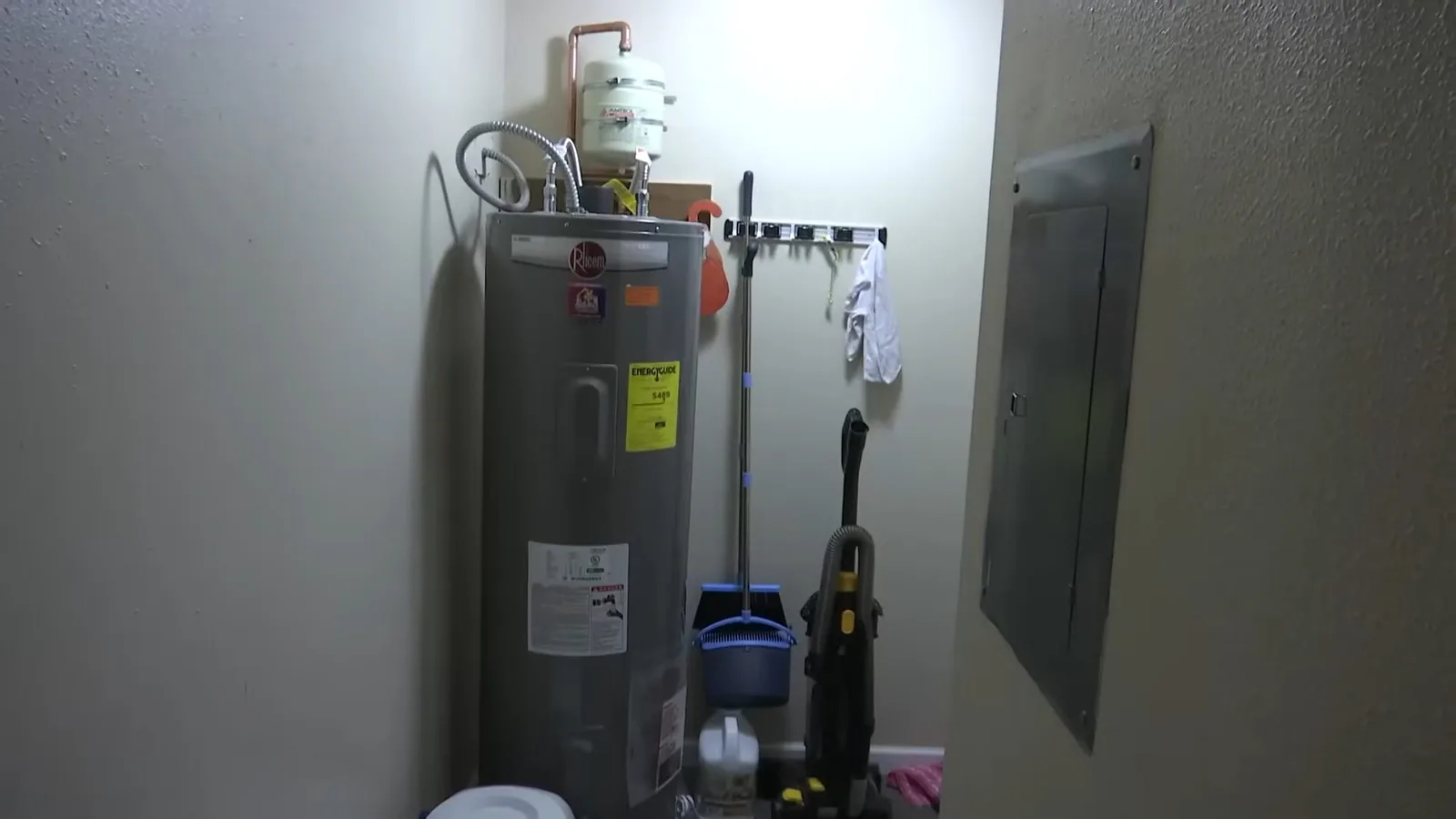
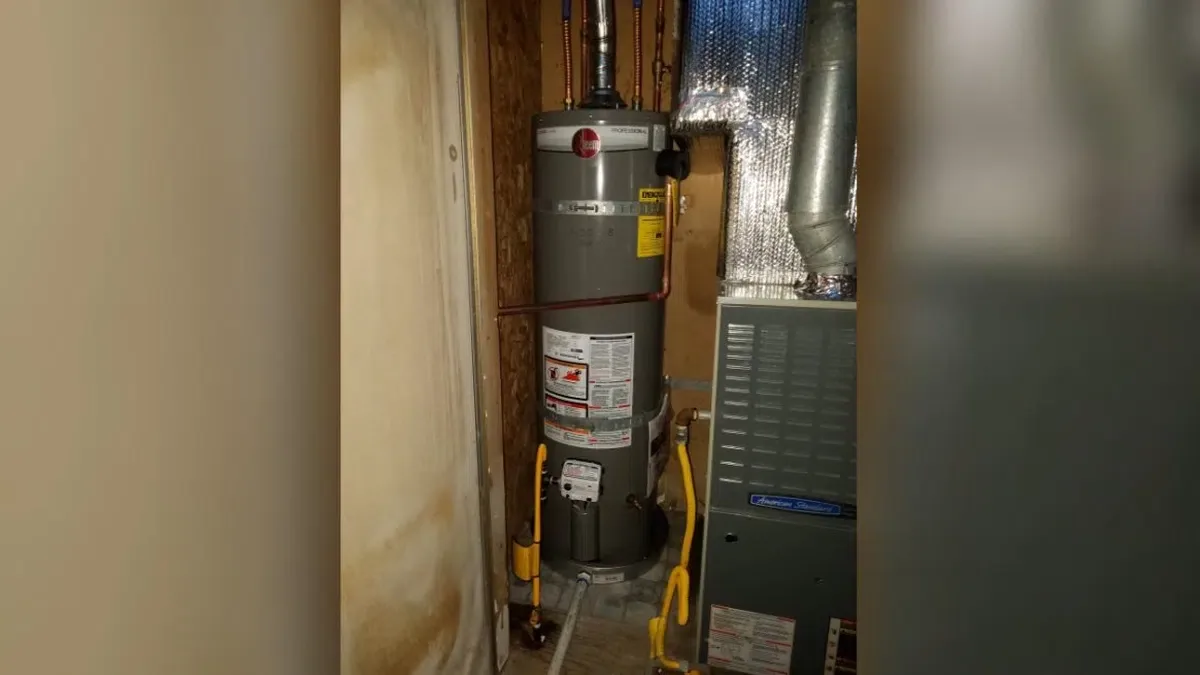
Gas, electric, hybrid and heat pump units compared
The fuel you have usually decides the fuel you buy, because changing fuel means new piping or a new circuit. Gas units heat quickly and recover fast. Electric units are simpler to install and need no flue. Hybrid and heat pump models pull heat from the surrounding air, so they need space, airflow and a drain for condensate.
| Unit type | Best fit | Watch for |
|---|---|---|
| Gas tank | Houses already on utility gas with a working flue | Venting, gas connection and combustion air |
| Electric tank | Homes without gas or with no good flue path | Circuit capacity and element wear |
| Hybrid or heat pump | Roomy basements with steady airflow | Space, condensate drain and cooler room air |
| Under-sink or point-of-use | One remote sink far from the main heater | Limited volume and a nearby outlet |
Point-of-use units and undersink water heater installation serve a single fixture, such as a far bathroom or a kitchen bar sink. They do not replace the main heater. Ask the plumber whether a small unit solves the real problem, which is often a long wait for hot water at one tap.
Sizing, brands and choosing who installs it
Size follows the household, not the room. How many people shower in the morning, whether there is a soaking tub and whether the dishwasher and washer run at the same time all matter. A unit that is too small runs out mid-shower. One that is too large wastes energy keeping extra water hot.
Gas heater installers and electric specialists check different things, so say which fuel you have. Water heater installation and servicing often share a visit, because a plumber who is already there can flush the tank and test the relief valve.
Ask the installer to explain the sizing choice in plain terms, and to say how the new unit will connect to the old piping. A good answer mentions the first-hour rating or the recovery rate, the venting plan and what the plumber will replace along with the tank.
Pennsylvania has no statewide plumber license, and licensing is municipal where it exists. Home improvement contractors doing larger residential jobs register with the Attorney General. Ask any installer for their registration details in writing, and confirm them before work begins.
Tank or tankless is a separate decision with its own tradeoffs, covered on the tankless water heater page. A same-day swap is sometimes possible when the unit is in stock and access is easy, and dispatch can confirm what is available when you call.
Ready to replace the water heater?
Call and give the fuel type, tank age and location. Dispatch will say what a visit would cover.
Water heater installation questions from Camp Hill callers
Should I choose a gas, electric, hybrid or heat pump water heater?
Take an older Camp Hill house with a gas tank in the basement and a failing burner. Staying with gas is usually the simplest swap, because the flue and gas connection are already there. Electric makes sense where no gas exists, and a hybrid suits a roomy basement with airflow.
What size water heater does a Camp Hill home need?
Size depends on how many people use hot water at the same time.
- Do now: note how many people shower in the morning and whether a soaking tub is used.
- Do now: write down the tank label size and the fuel type.
- Can wait: compare brands and efficiency ratings once sizing is settled.
Do I need a plumber for water heater installation?
Yes, for most homes. A water heater connects to water, fuel or power, and a relief valve and discharge pipe protect the house from pressure. A leak or a gas connection that is slightly off can become a safety problem, so the connections should be made and tested by a plumber.
Is a tank or a tankless water heater better for my house?
A tank stores hot water and costs less to swap when the unit and venting stay the same. A tankless unit heats water as it flows, saves floor space and needs proper gas supply and venting. Choose a tank for a simple swap, and consider tankless when space or long-term hot water demand is the concern. See the tankless page for details.
Is a leaking electric water heater worth replacing?
A leak from the tank shell means the liner has failed, so replacement is the answer. Turn off power to the unit at the breaker and shut the water supply before calling. Do not restore power until a plumber has looked.
Call about water heater installation
The same number reaches dispatch for replacements, sizing questions and a failed tank at any hour.
- Licensed and insured plumbers
- Same-day service when available
- 24/7 emergency dispatch